MICA Project
CONNECT WITH US!
  • Home
  • Resources / Recursos
    • Conozca Sus Derechos
    • Events and Updates / Eventos y novedades >
      • Recent News / Noticias
      • Presentations, Screenings, and Workshops
    • Filmar a oficiales de ICE
  • Get Involved / Involúcrese
    • Trivia Night 2025 >
      • TN 2025 Purchases
    • Upcoming Events
    • Trivia Night 2024
    • Trivia Night 2025 Sponsorship
    • Donate / Contribuya
    • Volunteer / Voluntarios
    • MICA Jobs / Trabajos en MICA
    • MICA T-shirt / Camiseta de MICA
  • Potential Clients / Clientes Nuevos
  • About MICA / Sobre MICA
    • Impact Report 2025
    • Our New Home
    • Contact Us / Contáctenos
    • What We Do / Lo Que Hacemos
    • Community Outreach / Compromiso Comunitario
    • Immigration 101
    • Portraying Humanity
  • Who We Are / Quiénes somos
    • Staff
    • Board of Directors / Cuerpo Directivo
    • Funders
Español
Immigration 101
Here are a few key topics that are important to understanding the basics of immigration in the United States. 
Picture
Photo credit: ​https://infograph.venngage.com/p/91266/immigration-today-vs-the-1920s

​Important Government Offices to Know
U.S. Citizenship and Immigration Services​​ (USCIS)
U.S. Department of Homeland Security​ (DHS)
U.S. Immigration and Customs Enforcement (ICE)
U.S. Customs and Border Patrol​ (Border Patrol)

Picture
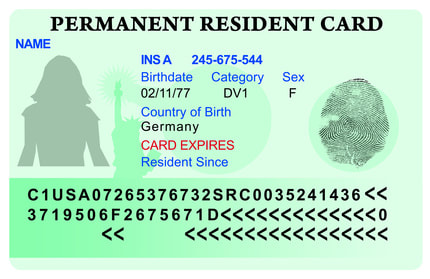
Photo credit: http://www.immivietnamvisa.com/can-i-apply-for-vietnam-visa-with-us-green-card/

Green Card

  • A Green Card, or a Permanent Resident Card, gives official immigration status in the U.S. and certain rights and responsibilities, including the right to work.
  • You are eligible for a green card if you are being sponsored by a family member, employer, or other circumstances which can be found here: www.uscis.gov/greencard/eligibility-categories
  • If you are eligible, normally, you just need two forms: a green card application form and an immigrant petition must be filed by a sponsor or petitioner for the person obtaining the green card. Although, in some circumstances, other forms are necessary.
  • After the petition is approved by the USCIS, the process continues with the green card application which includes fingerprints, photos, records, and an interview.
  • USCIS can either approve or decline the application, and if approved, the green card is valid for 10 years.
  • More information on green cards can be found here: www.uscis.gov/greencard

PicturePhoto credit: https://ask.naij.com/interesting-facts/how-to-get-usa-visa-in-nigeria-i28185.html


                           Visas
  • To legally be within the U.S. as a non-citizen, you must have a visa or another proof of permanent/temporary residency.
  • There are different types of visas, so the purpose of intended travel will determine what type of visa to apply for.  
  • Depending on what type of visa you need for your travel into the U.S., the form you fill out will be different for each type and fees and processes will also vary.
  • You will visit a U.S. embassy in your home country and bring your completed visa application form along will all required documents such as birth certificates, proof of the reason you’re in the U.S., fingerprints, photos, etc. You will undergo an interview process as well.
  • Once your application is approved, you may enter the U.S. under restrictions and limitation put upon you by your given visa. ​
  • More information on visas can be found here: travel.state.gov/content/visas/en.html


Picture
https://www.bustle.com/articles/3671-deferred-action-for-childhood-arrivals-daca-anniversary-and-the-state-of-immigration-reform

DACA

  • The September 13th decision where a Texas-based judge ruled Biden's 2022 DACA regulation illegal. According to this decision, the UCSIS can continue to accept initial DACA applications but cannot approve them. 
  • If you believe you are eligible for RENEWAL, please contact our office! There is only a short window of time to submit applications.  
  • General information about DACA:
    • DACA, or Deferred Action for Childhood Arrivals, was a policy announced by the Secretary of Homeland Security on June 15, 2012 that stated that under certain circumstances, children may request for deferred action from removal or deportation. DACA does not provide legal status.
  • To be eligible, applicants have to meet the all qualifications below:
    • They were under age 31 before the date of June 15, 2012
    • They came to the U.S. before reaching the age of 16
    • They continuously resided in the U.S. since June 15, 2007
    • They had not committed a felony/serious misdemeanors, nor did they pose a threat to national security
    • They had to be in school, graduated/obtained a degree or GED, or have served in the military.
    • More information can be found here: www.uscis.gov/humanitarian/consideration-deferred-action-childhood-arrivals-daca
  • Current DACA recipients are eligible to apply for Employment Authorization, provided that there is a need for an economic need for employment ​

Picture

Asylum

  • Asylum is a form of legal protection that host countries grant to migrants who have been forcibly displaced and are fleeing from harm or persecution in their place of origin. 
  • Asylum is granted to those already in the United States or arriving at the U.S. border that meet the following characteristics of a refugee. 
    • located outside of the United States  
    • of special humanitarian concern to the United States
    • demonstrates that they were persecuted or fear persecution due to race, religion, nationality, political opinion, or membership in a particular social group
    • is not firmly resettled in another country
    • is admissible to the United States  
  • Though the terms Refugee and Asylee are similar they differ in that refugees are outside of their home country and meets the before mentioned characteristics, while an asylee is an individual that meets the same characteristics as a refugee but is already inside the U.S. or is seeking admission at a port of entry. 
  • There are two primary ways in which to apply for asylum; Affirmatively and Defensively. 
    • Affirmative asylum processes require you to be physically present in the United States. You may apply for asylum regardless of how you arrived in the U.S. or your current immigration status. You must apply for asylum within 1 year of the date of your last arrival in the United States, unless you can show changed circumstances or a change in filing time. You may apply for affirmative asylum by submitting Form I-589, the Application for Asylum and for Withholding of Removal to USCIS. 
    • Defensive asylum applications occur when you request asylum as a defense against removal from the U.S. You must be in removal proceedings in immigration court for asylum processes to be defensive. Individuals are generally placed into defensive asylum processing in one of two ways: they are referred to an immigration judge by USCIS after they have been determined to be ineligible for asylum at the end of the affirmative asylum process or are placed into removal proceedings. 
  • If you were granted asylum within the past two years, you may petition for certain family members or to obtain derivative asylee status. 
Picture

Refugee

  • According to U.S. law, a refugee must meet the following characteristics:
    • located outside of the United States  
    • of special humanitarian concern to the United States
    • demonstrates that they were persecuted or fear persecution due to race, religion, nationality, political opinion, or membership in a particular social group
    • is not firmly resettled in another country
    • is admissible to the United States  
  • To be considered for refugee status, you must be referred to the USRAP (U.S. Refugee Admissions Program) and once you receive a referral you will be helped with the application process and be interviewed abroad by a USCIS officer.
  • Family may be included in your application as long as all relations are legal with the form I-730, Refugee/Asylee Relative Petition.
  • Once interviewed, reviewed, and examined medically, families will be resettled in the U.S. with careful consideration of keeping them together upon resettlement.
  • Cultural training and medical and cash assistance will be given to upon arrival as well. Entering the U.S. as a refugee, you are granted permission to work upon arrival with the completion of an EAD (employment authorization document).
  • After one year of entering with refugee status, you may apply for a green card with the form I-485, Application to Register Permanent Residence or to Adjust Status. ​
  • More information can be found here: www.uscis.gov/humanitarian/refugees-asylum/refugees

Picture

Temporary Protective Status (TPS)

  • Temporary Protected Status (TPS) is a program established in 1990 that allows migrants whose home countries are considered unsafe the right to live and work in the United States for a temporary, but extendable, period of time. 
  • Countries that currently are designated as TPS countries can be found here. 
  • Once a country's TPS designation expires, individuals return to the immigration status they held prior to receiving TPS, which for most migrants means reverting back to undocumented status. They can also apply for work or student visas though temporary. Those whose spouses or adult children are citizens or legal residents in the U.S. could be eligible to stay in the country legally. 
  • Once a country receives a TPS designation, any citizen of that country who is already present in the U.S. is eligible to apply for the program provided they meet certain requirements. 
  • In order to be eligible for Temporary Protective Status individuals must meet the following requirements: 
    • Be a national of a country designated for TPS, or a person without nationality who last habitually resided in the designated country;
    • File during the open initial registration or re-registration period, or you meet the requirements for late initial filing during any extension of your country’s TPS designation.
    • Have been continuously physically present in the United States since the effective date of the most recent designation date of your country. 
    •  Have been continuously residing in the United States since the date specified for your country.

​More terms to come! Stay tuned!

Proudly powered by Weebly